Russia pledges to improve US relations: 'It's hard to make them worse'

Russia
hopes to resume dialogue and bring relations with the US "back to a
constructive course," according to Kremlin spokesman Dmitri Peskov, who
said it would be "hard to make them worse."
Asked
by journalists about the Kremlin's links with the US, Peskov said: "I'd
like to remind you of President Putin's words -- numerous times he has
talked about his wish to build good, mutually beneficial relations based
on mutual respect and equality."
"The President always said he expected a
reciprocity from Washington," Peskov added. "Now we know that our
bilateral relations are at the bottom so it's hard to make them worse,
but we certainly hope for resuming a dialogue and we'll start a
difficult and slow process of bringing the relations back to a
constructive course."
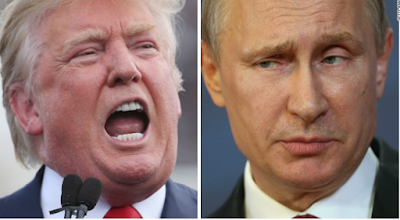
Improving US ties with Russia was a key plank of US President-elect Donald Trump's foreign policy during the election campaign.
Fresh start?
Many
in Russia had expected Hillary Clinton -- who has been consistently
critical of the Kremlin and is deeply unpopular in Moscow as a result --
to sweep to victory on November 8.

Following
Trump's unexpected win, there are hopes of a fresh start -- though
Trump told the New York Times this week that he was not looking to
"reset" US-Russia relations.
Asked
about Trump's comments, Peskov referred to Clinton's previous ill-fated
attempt to "reset" relations while serving as Secretary of State.
"As
for a reset, we can only agree with the President-elect because this
word has embarrassed itself as the consequences of that reset are not
the ones we'd like to see," Peskov said.
"The
term doesn't matter. It's about a will and showing the readiness for
normalizing the relations -- these are the most important things."
Western sanctions
Relations
between the US and Russia have deteriorated in recent years. They
reached a low point in 2014, when Ukraine's pro-Kremlin leader was
toppled in what Moscow describes as a Western-backed coup.
Russia's subsequent annexation of Crimea and support for rebels in eastern Ukraine prompted Western sanctions.

The
West's policies on Ukraine, new US missile bases in Eastern Europe, and
NATO troop deployments near Russia's borders are all viewed by the
Kremlin as evidence of US aggression.
In
an interview recorded earlier this year with the filmmaker Oliver Stone
-- when the pollsters were predicting an overwhelming victory for
Hillary Clinton in the US presidential election -- Putin vowed to
respond.
"We need to take counter
measures ... to pose a threat to rocket systems that are threatening to
us," he told Stone in the director's latest controversial offering,
"Ukraine On Fire."
In October,
Russia's military sent nuclear-capable "Iskander" missiles to its Baltic
enclave of Kaliningrad, within striking distance of Eastern European
targets.
A senior Russian defense
official said one of the missiles had been deliberately exposed to US
spy satellites in what US intelligence officials interpreted as a
"gesture to express disapproval" with NATO.
Geopolitical shift
"Why
are we reacting to NATO expansion so emotionally?" Putin asked in the
Stone documentary, broadcast on Russian television on November 21, a
national holiday in Ukraine which marks the toppling of the pro-Russian
government.

"When
a country becomes a NATO member, it becomes hard for it to resist the
pressure from such a big country -- NATO's leader -- like the United
States," he said.
The comments were
interpreted as a shot across the bows of Clinton, who might have been
on the cusp of entering the White House when the documentary aired.
But the geopolitical landscape has unexpectedly shifted in the meantime.
Trump,
who won the US presidential election against the odds, campaigned on a
platform of detente with Russia and has expressed reservations about
NATO.
While the possibility of a
dramatic fallout with the Kremlin remains real, so is the prospect of a
warmer phase in relations between Moscow and Washington.

No comments:
Post a Comment